
If you’ve been struggling with moderate to severe tooth loss, then you know how life-changing the situation is. Other than impacting the way you look and your self-confidence, missing some or all of your pearly whites can also affect your ability to eat and talk. The good news is that you can address this issue with natural-looking dentures in Willow Grove! Our team at Advanced Smile Design can create your new set of teeth that can renew your beautiful smile as well as provide multiple benefits for your oral health. Keep reading to learn more or call us to schedule a visit.


Have you struggled with moderate to severe tooth loss? If so, you’re likely a candidate for dentures. In fact, they are known for their ability to replace a large number of teeth seamlessly. If you are interested in finding out if this is the best tooth-replacement solution for you, then schedule a consultation with us. This way, we can review your dental history, assess the health of your teeth and gums, and learn all about your smile goals.
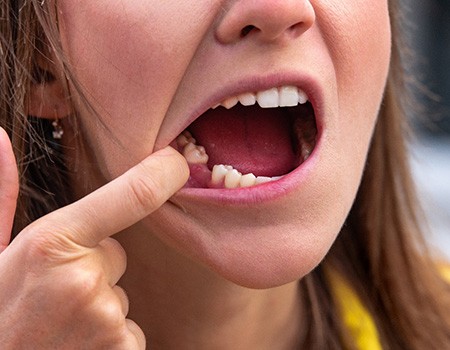
Tooth loss can have a significant effect on your well-being. According to the American Academy of Periodontology, there are multitude of negative consequences of missing teeth. They include facial sagging, difficulty speaking, challenges while eating, and low self-esteem. When you replace your missing teeth with dentures, you can improve all of these areas and your quality of life.
Dentures are ideal for those who are missing multiple teeth. Depending on the number of teeth you are missing and where they are located in the mouth, we can put together a custom treatment plan to meet your needs. The main qualification that you need to meet is being in good oral health. This means that if you have existing dental issues, like tooth decay or gum disease, they need to be eliminated ahead of time. After your existing teeth and gums are in good condition, we can move forward with the rest of the process.

If dentures don’t seem like your cup of tea, there are various other solutions available that may be a better fit. Here are some of the ones that we offer.
This restorative treatment has been used for decades, and it’s easy to see why it’s so popular. Dentures are a cost-effective and straightforward method for conveniently renewing a person’s smile and boosting their self-esteem. During your initial consultation, we’ll assess your situation and walk you through the different kinds of dentures that can help you.
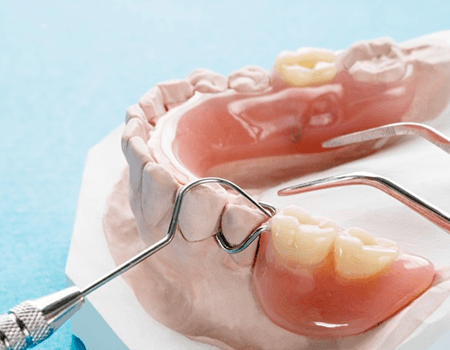
Some patients experience losing one or several of their teeth. If this is your case, then we might recommend partial dentures. These prosthetics are custom-designed to fit your specific smile while only replacing the particular pearly whites that you’re missing. They consist of a gum-colored base and the teeth are typically kept in position via small metal clasps that wrap around nearby teeth.
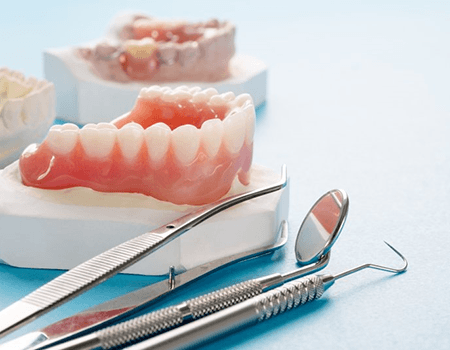
If all of your teeth are gone, then full dentures will be the viable solution for restoring your bite. Similar to partials, this option also comes with a gum-colored base but isn’t held in place with metal clasps. Instead, these prosthetics rely on the natural suction of your gum line for support. You may also use a small amount of denture adhesive to help keep it in position.
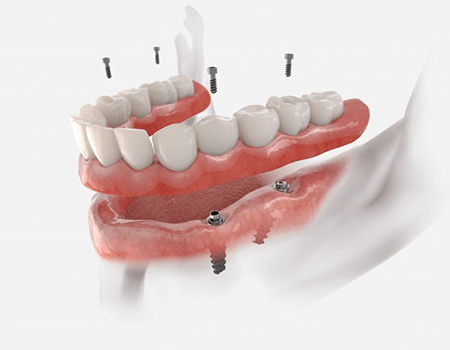
Instead of using natural teeth or your gums for supporting your dentures, you can choose to get dental implants embedded into your jawbone. Your restoration(s) will then be attached to the metal posts, as your facial structure will provide the stable foundation necessary for regaining the majority of your natural chewing power. Not only will your new teeth remain sturdy, but your results can also preserve your jawbone and last several decades to a lifetime with proper care!
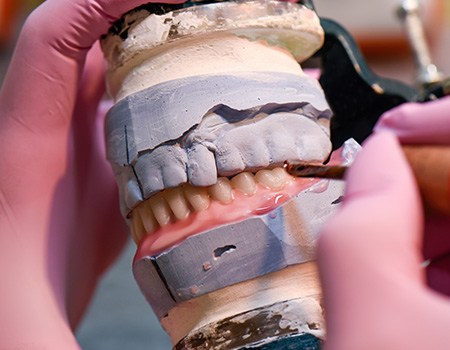
Now that you’ve made the life-changing decision to get dentures, you may be curious to know what the manufacturing process looks like. The truth is, because your new teeth are customized to your individual smile, they require a detailed, multi-step process to be created. Whether you’ve selected a partial or full denture, here’s how the magic happens from start to finish!
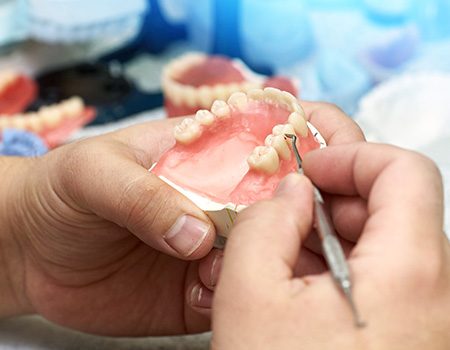
Your new dentures will be comprised of two parts: the base of the denture, and the teeth. Here’s a closer look at each:
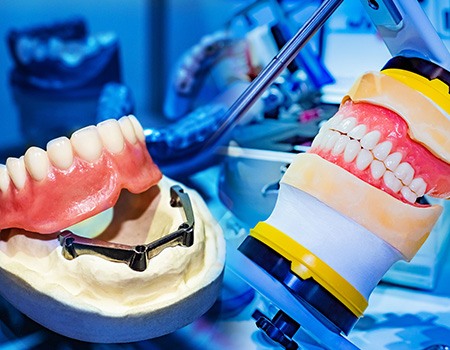
Because each denture is completely customized for the patient’s individual mouth, they require a highly detailed, multi-step process to create. Here’s a closer look at how they’re made, step-by-step:
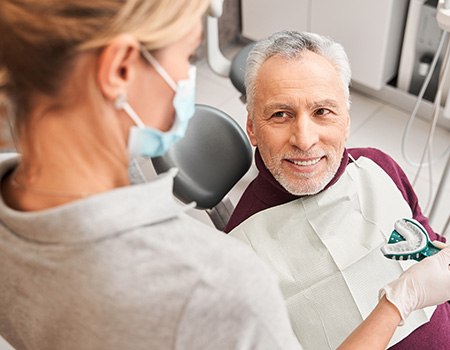
Please be aware that it’s completely normal for patients to feel some level of discomfort when they first get their new dentures. Initially, you may experience some mild soreness and have difficulty eating and speaking with them in. Over time, however, your mouth will adjust to them, and they’ll feel very similar to natural teeth. You can also speed up this process on your own by practicing speaking, eating a soft diet until you are more comfortable, exercising your facial muscles, and even temporarily using a denture adhesive. Should any discomfort persist, reach out to your dentist, as you may need further adjustments.

Losing multiple teeth can make everyday activities like eating and speaking difficult. Dentures offer a transformative solution for those missing several or all of their teeth, enhancing quality of life. With dentures, you can regain confidence in your smile and enjoy improved functionality. If tooth loss has been a struggle, dentures provide a fresh start, offering benefits that rejuvenate your oral health and appearance.

Having gaps in your smile can be tough, affecting self-esteem, social life, and even causing sadness. Those uncomfortable with tooth loss might avoid socializing. Luckily, dentures bring back smiles and function, boosting confidence. They help eliminate concerns about appearance, speech, and eating, encouraging social interaction while reducing anxieties. With dentures, edentulous individuals (those without teeth) can regain their self-assurance, enhancing both their appearance and overall well-being.

When teeth are missing, speaking can be challenging. Proper tongue and lip positioning is essential for clear pronunciation. Dentures fill this gap, enabling clearer speech. After a brief adjustment and practice, you'll speak naturally, as dentures act like your real teeth, ensuring more confident and articulate communication.

Eating nutritious foods is essential, but missing teeth can hinder proper chewing, causing digestion problems and malnutrition. Dentures solve this by enabling effective chewing, leading to a varied diet rich in healthful vegetables, fruits, and proteins. With dentures, you can nourish your body more efficiently, ensuring it receives the vital nutrients necessary for optimal overall health.

Choosing dentures when you have some natural teeth left can prevent them from shifting in your mouth. Dentures also share the load of chewing, decreasing strain on your remaining teeth and reducing wear and tear. By doing so, dentures contribute to maintaining the alignment of your teeth and promoting overall oral health.

Your smile is a significant aspect of your first impression. Whether it's a job interview, sales pitch, or seeking promotions, a complete smile holds significant advantages. A 2019 study revealed that poor oral health is linked to decreased employment prospects. Prioritizing your smile can positively impact professional opportunities, underlining the value of maintaining good oral health for career success.
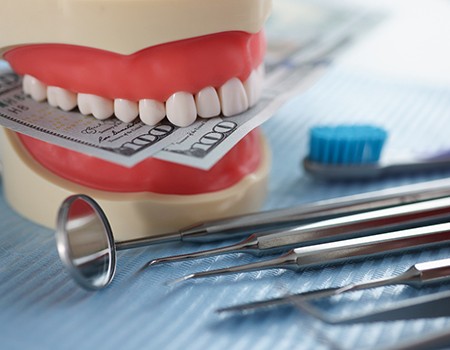
Even if you need dentures, you may hesitate due to their price. That much is understandable – prosthetic teeth won’t help if they “break the bank.” However, the cost of dentures varies from patient to patient. That reality means you must consult our dentists for an exact estimate. Once you have, the Advanced Smile Design team will strive to make your care affordable. We’ll even walk you through dentures’ cost factors and available payment options. To learn more, keep reading or call us in the coming days.
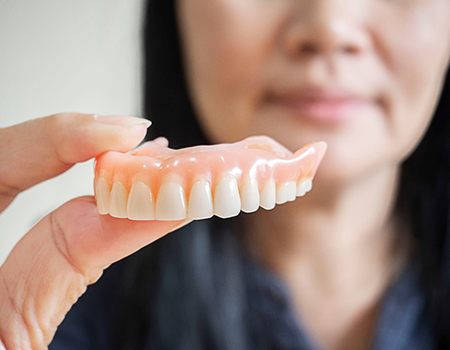
At your initial consultation, our team will perform an oral exam. This step reviews (among other things) factors relevant to your dentures’ final price. These include:
Even as you assess these factors, remember that the cheapest dentures aren’t ideal. Such models typically use subpar acrylic for their bases and teeth. That being the case, make sure to choose higher-quality prosthetics!
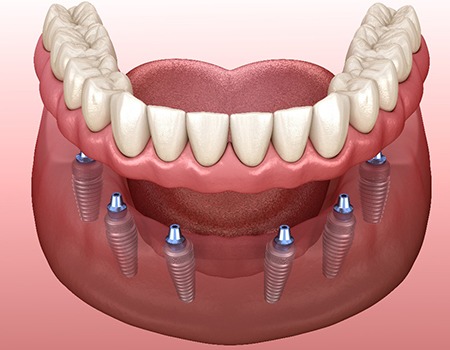
Technically, implant dentures have a higher upfront cost than standard ones. However, their benefits justify this extra expense.
Firstly, note that implant dentures use dental implants – restorations that fuse with your jaw. In doing so, these prosthetics remain secure and stable; they’ll never slip or fall. Better yet, their permanence ensures they look and act like natural teeth.
At the same time, implant dentures are an excellent long-term investment. Their implants can last 15-30 years with proper care, giving them a greater lifespan than typical dentures. As a result, the high price they entail is offset by needing fewer replacement visits.

In most cases, dental insurance does cover dentures. These prosthetic teeth are typically counted as a major procedure. As such, many dental policies see them as “medically necessary” and match 50% of their cost.
That said, there are some exceptions. Your insurance plan may limit its denture coverage. Therefore, make sure to confirm your benefits before treatment. Our office can help you do so if necessary.

Even if you don’t have insurance, there are other ways to make dentures affordable. In particular, many dental practices offer a variety of payment options. With the right one, prosthetic teeth don’t have to exceed your budget.
Consider our own Advanced Smile Design, for example. We happen to offer the following:
As you can see, Advanced Smile Design can make your dentures effective and budget-friendly. So, please book a consultation with our office and see us soon!
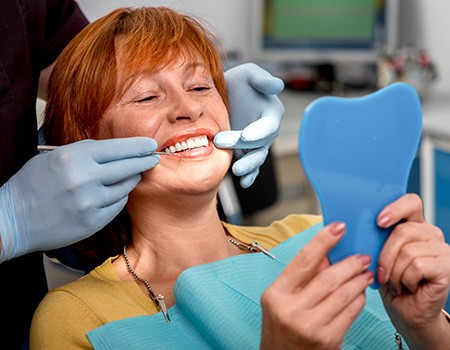
As amazing as dentures are, they won’t stay functional all on their own. These restorations only work when you give them regular and consistent care. (Anything less would lead to an early treatment failure, putting your restored smile at great risk.) That said, don’t worry; Advanced Smile Design has tips on caring for dentures over long periods. Just keep reading to learn about them in detail, or call us to hear more over the phone.
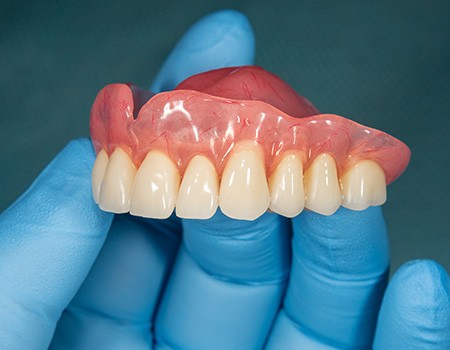
The first thing to remember is to remove and rinse dentures after meals. Through this cleaning, you eliminate plaque and other debris that cling to your tooth replacements. Such an effect will greatly lower your risk of oral health issues, especially gum disease.
All that said, don’t use hot water for the rinses. High temperatures can warp denture material, causing your prosthetics to fit poorly.
You should also give your dentures a once-daily cleaning. After all, those sessions would remove “leftovers” that a mere rinse might miss. They’d also ensure your dentures feel good and fresh when worn.
There are only two things to note when cleaning dentures. First, brush them with a soft-bristled toothbrush and dish soap; normal toothpaste is too abrasive. Second is to rinse your dentures after brushing to wash off stubborn materials.
While durable and sturdy, modern dentures can still break. You should thus keep them safe through subtle and appropriate methods. That way, you won’t have to deal with chipped, cracked, or fractured prosthetics.
You can do several things to protect dentures. For instance, place a towel in your sink during cleanings; it’d cushion your device from falls. Another method is to keep your dentures away from children or pets.
Before you go to sleep, you should always remove your dentures. Wearing these restorations overnight isn’t good for your health, so place them beside your bed instead.
If you wear your dentures while asleep, you could suffer various problems. One example is irritated gums, as your gum tissues’ circulation is restricted by constant denture use. There’s also the risk of elevated plaque levels that make gum disease (or even pneumonia) more likely.
Once you have removable dentures, you should regularly check them (and your mouth) for changes. Issues related to your restorations – mouth sores, irritated gums etc. – often require dental visits.
In particular, see a dentist if your denture get damaged. DIY repairs would only damage your restorations further and put your health at risk. On the other hand, our team has the skill and knowledge necessary to reline or replace dentures.
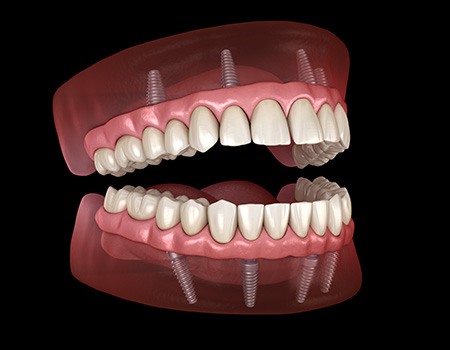
Modern All-on-4 dentures aren’t removable, so their aftercare methods include:
While tooth loss can happen to anyone, it occurs more often in seniors. It’s thus older adults who most often wear dentures. Their oral problems put them at high risk of missing teeth.
Current research lends support to this conclusion. Firstly, the National Center for Health Statistics finds that 66% of those aged 40-64 lack at least one tooth. (In contrast, only 33% of adults in their twenties are missing teeth.) Furthermore, the American Dental Association concluded that 57% of 65–74-year-olds wear dentures.
When getting dentures, discomfort levels can vary. Whether (and to what extent) you ache from the process will depend on your situation.
If you undergo tooth extraction before denture work, you’ll likely face some pain post-surgery. In that case, you should take prescribed pain medication as directed. Your discomfort will improve about 3-5 days after the initial extraction.
Once your new dentures are placed, minor irritation may occur as your mouth adjusts. This symptom’s duration changes from person to person. (In many cases, it lasts months.) If the new denture replaces an old one, adjustment may take longer.
Typically, no – you shouldn’t sleep with your dentures. Dentists recommend that you take them out at night before bed. (The only exception is the first day with them. You’ll be told to wear them for 24 hours to ensure a proper fit – sleep time included.)
You see, wearing dentures constantly causes oral issues. The habit restricts gum circulation, leading to soft tissue irritation and enhanced ridge resorption. It also increases tongue plaque levels and your risk of pneumonia. Meanwhile, taking dentures out at night lets your gums rest and keeps germs from accumulating.
When they work correctly, dentures will change the shape of your face. Don’t worry, though – this effect is a good thing!
If you didn’t already know, facial muscles sag when you lose teeth. This process can lead to a sunken look if left untended. That said, dentures work to give those muscles support. The result is a general improvement in your appearance.
Of course, things don’t always occur as planned. You may get ill-fitting dentures that don’t support your facial muscles well. Should that happen, see your dentist as soon as possible. They can have the prosthetic(s) refitted or replaced as needed.
 Ready to Get Started?